Amazon-owned Zoox begins Columbus road mapping with sensor-equipped test cars ahead of robotaxi deployment
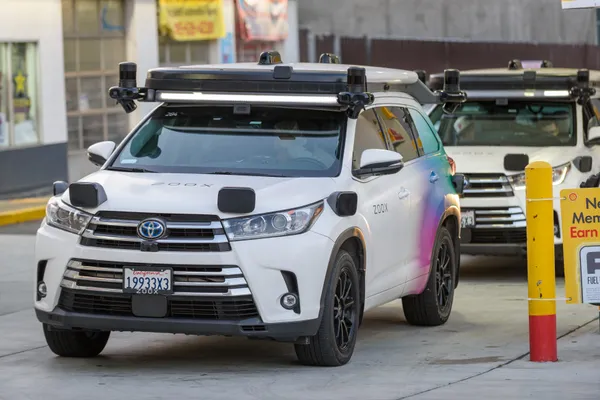
Zoox test vehicles appear on Columbus streets as company expands its U.S. autonomous-vehicle footprint
Amazon-owned autonomous vehicle company Zoox has begun circulating sensor-equipped test vehicles on public streets in Columbus, marking a new phase of local data collection that typically precedes broader autonomous-vehicle testing and, eventually, any potential robotaxi service.
The vehicles currently operating in Columbus are not the company’s purpose-built, steering-wheel-free robotaxis. Instead, they are part of Zoox’s “test fleet”: retrofitted vehicles equipped with cameras, lidar, radar, and onboard computing used to map road networks and capture driving data in real-world conditions. In Columbus, Zoox says these vehicles are being driven manually by trained safety operators.
Zoox has stated it does not plan to offer public rides in these test vehicles and does not plan to operate them without a safety driver. The company has also cited Ohio’s variable weather as a reason the area is useful for collecting data to inform testing in other urban environments.
How the Columbus activity fits into Zoox’s broader rollout
Zoox has been developing autonomous driving technology for years and has conducted testing in multiple U.S. cities. The company has also moved into limited public-facing operations in two markets: Las Vegas and San Francisco. Those deployments use Zoox’s distinctive, custom-built robotaxi designed around a bidirectional driving concept and a cabin layout where passengers face each other.
The appearance of Zoox test vehicles in Columbus should be understood as an early-stage step rather than a commercial launch. Road mapping and data-gathering typically come before any expansion of autonomous operations, and commercial service—if pursued—generally requires additional operational, regulatory, and safety milestones beyond initial mapping runs.
Safety and oversight questions amid a fast-evolving robotaxi sector
Zoox’s expansion comes as the U.S. robotaxi sector faces heightened attention on safety performance, incident reporting, and software updates. In the past year, Zoox has issued multiple voluntary software recalls tied to specific driving behaviors and has described changes intended to reduce risk in edge cases such as complex intersections and interactions with vulnerable road users.
For Columbus residents, the immediate impact is primarily observational: manually driven test vehicles collecting data on local streets. Any shift from mapping to more advanced autonomous testing would be a distinct stage that typically involves additional coordination with public agencies and clearly defined operational boundaries.
What to watch next in Columbus
- Whether Zoox expands the number of test vehicles or the geographic area covered in Columbus.
- Any formal announcements about autonomous (not manual) operations locally, including safety-driver requirements.
- Any stated timelines—if any—for broader deployment beyond mapping and data collection.
At this stage, Zoox’s Columbus presence reflects early groundwork: building a detailed understanding of local roads and driving conditions before any potential next steps.