Last remaining York Steak House in Columbus reopens after back taxes paid following shutdown notice
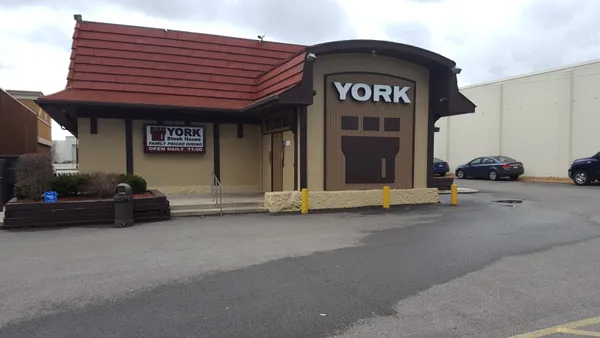
A brief shutdown notice raised concerns about the future of an Ohio restaurant with national significance
The last remaining York Steak House location—an independently operated restaurant on West Broad Street in Columbus—faced a short-term operational disruption this week after a tax-related enforcement notice led to a temporary closure requirement. The issue was resolved after the owner paid the outstanding back taxes, allowing the business to move toward reopening.
The incident fueled immediate public concern because the Columbus restaurant is widely recognized as the final operating outpost of a once-national York Steak House chain that expanded across multiple states during its peak decades. While the brand’s broader footprint disappeared years ago, the Columbus location continued operating as an independent restaurant, retaining the chain’s cafeteria-style service model and much of its original look and menu structure.
What happened: tax compliance action and rapid resolution
The enforcement action centered on unpaid taxes and resulted in a requirement that the restaurant stop operating until the matter was satisfied. The outstanding balance was subsequently paid, resolving the immediate compliance barrier. Based on the sequence of events, the interruption appears to have been administrative rather than a sign of an announced closure or a change in ownership.
Tax-related shutdown notices can halt operations quickly because authorities may require immediate payment or an approved arrangement before a business can resume activity. For restaurants, such interruptions can be disruptive even if short, affecting staffing schedules, suppliers, and customer traffic—especially for a high-profile local institution.
Why the restaurant’s status draws heightened attention
York Steak House began in Columbus in the 1960s and later grew into a large mall-anchored steakhouse chain before contracting sharply. The West Broad Street restaurant is notable because it outlasted the chain’s other locations, remaining open through decades of changes in retail patterns and dining habits that contributed to the decline of many mall-dependent concepts.
The restaurant’s continuity has made it a point of interest for local diners and out-of-town visitors seeking a legacy dining format that is increasingly rare: customers select items in a line and pay at the register, combining elements of quick service with a traditional steakhouse menu.
Ownership transition set the stage for scrutiny
The business was publicly marketed for sale in 2024 as the longtime operator prepared to retire, a development that amplified uncertainty about long-term continuity. A tax compliance disruption occurring after a widely discussed ownership transition can intensify speculation, even when the underlying issue is resolved quickly.
What to watch next
- Confirmation of regular operating hours following the tax payment and reopening process
- Whether any payment plan or ongoing compliance requirements accompany the resolution
- Signals of operational continuity, including staffing stability and supplier relationships
In the near term, the decisive factor is straightforward: tax obligations must remain current for uninterrupted operations.