Multiple Departments Contain Columbus-Area Structure Fire as Limited Water Supply Forces Tanker Shuttle Operations
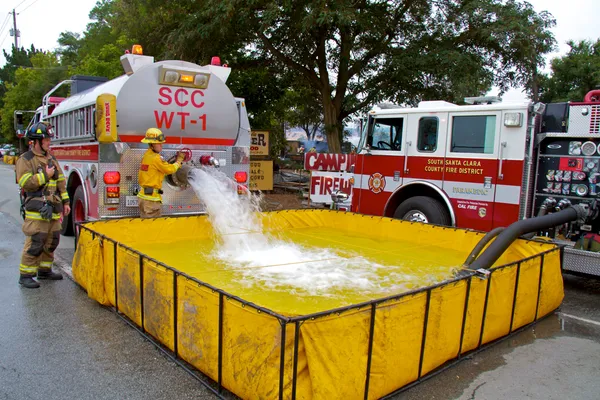
Mutual aid response mobilized for tanker support
Firefighters from multiple departments were dispatched to a structure fire in the Columbus area after an initial response escalated into a mutual aid operation focused on water supply and staffing needs. The call drew in additional apparatus to provide tanker support, a common requirement when hydrant access is limited or when available flow cannot sustain extended firefighting operations.
By the time assisting units arrived, the structure was reported to be fully involved. Fireground conditions were complicated by the building’s proximity to other structures and by wind, increasing exposure risk and pushing crews toward tactics that prioritize perimeter control and protection of nearby property while establishing a reliable water source.
Why water supply becomes a decisive factor at structure fires
Many fire engines carry an onboard water tank designed to support an initial attack, but that water can be depleted quickly when multiple handlines are operating or when defensive master streams are needed. In areas without hydrants, or where hydrants exist but cannot deliver sustained flow, departments typically transition to rural water supply operations that depend on tenders (tankers) and portable water tanks.
In such scenarios, tankers shuttle water between a fill site and the fireground, where it is dumped into portable reservoirs. Pumpers then draft from those reservoirs to supply attack lines. This method is personnel- and apparatus-intensive, which often drives the decision to request mutual aid early to maintain continuous operations, staff critical roles, and rotate crews.
Operational priorities during the incident
- Establishing a continuous water supply using tanker shuttle operations and portable tanks
- Containing fire spread to adjacent structures, particularly under windy conditions
- Coordinating incoming units for staffing, scene safety, and sustained suppression
Structure fires in limited-water areas frequently require rapid scaling of resources to sustain flow rates needed for interior or defensive suppression, while ensuring enough personnel are available for command, safety, and support functions.
What the response indicates about interagency coordination
The incident underscores the operational reality that structure fires can quickly exceed the capacity of a single department when water access is constrained. Mutual aid enables departments to assemble the specialized apparatus and staffing needed for prolonged water movement, exposure protection, and relief rotations. In practical terms, additional tankers and firefighters are not only about more hoses on the ground; they are central to maintaining uninterrupted flow, preventing rekindles, and ensuring crews can work safely over the duration of the incident.
Officials have not publicly released comprehensive details on injuries, cause, or damage estimates in the available initial reporting. Fire investigations in such cases typically continue after suppression is complete and the scene is stabilized for safe entry and assessment.