Northern lights may be visible in central Ohio Monday night as severe geomagnetic storm reaches Earth
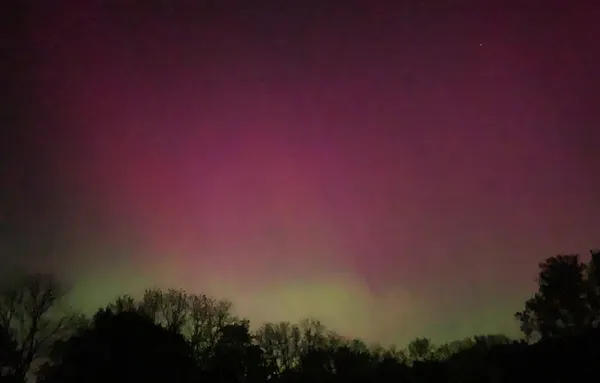
A rare space-weather setup could push aurora sightings into Ohio
Residents across central Ohio may have an opportunity to see the aurora borealis Monday night, January 19, as a strong geomagnetic storm affects Earth’s magnetic field. The event follows an X-class solar flare on Sunday, January 18, that propelled a coronal mass ejection (CME) toward Earth. By Monday afternoon, severe geomagnetic storm conditions had already been reached, with effects expected to continue through the evening.
Such storms can expand the typical auroral oval away from the polar regions, increasing the odds of visible aurora at mid-latitudes. While visibility in Ohio remains conditional and cannot be guaranteed, the combination of storm strength and nighttime timing places central Ohio within a zone where faint aurora is possible, especially from darker locations with a clear view toward the northern horizon.
What is driving the potential display
Auroras occur when charged particles associated with solar eruptions interact with Earth’s magnetosphere and upper atmosphere. During stronger geomagnetic storms, the interaction can intensify and shift auroral activity farther south. Space-weather forecasts for this event include severe geomagnetic storm levels (G4 on a five-step scale), a magnitude that is considered uncommon.
Aurora visibility at Ohio’s latitude typically depends on both storm intensity and how directly the CME interacts with Earth’s magnetic field during the darkest hours.
How to maximize chances in central Ohio
Even under strong geomagnetic conditions, viewing depends heavily on local conditions—especially cloud cover and light pollution. The aurora may also appear low on the horizon and can be easier to detect in photos than with the naked eye.
- Look north: Choose a spot with an unobstructed northern horizon, away from buildings and trees.
- Reduce light pollution: Rural areas and parks outside the Columbus metro typically offer better skies than city neighborhoods.
- Check intermittently: Activity can surge in brief bursts; repeated checks after dark through midnight can improve odds.
- Use a camera or phone: Long-exposure or night-mode photos may capture faint aurora not readily visible to the eye.
What could limit visibility
The most significant constraints are cloud cover and the timing of peak geomagnetic activity. Forecasts also carry uncertainty: a CME can arrive earlier or later than expected, and its magnetic orientation can strengthen or weaken the auroral response. If peak storm conditions occur before full darkness in Ohio, the most vivid effects could be less noticeable locally.
Space-weather impacts are monitored for more than skywatching. Severe geomagnetic storms can affect high-frequency radio propagation, satellite operations, and polar-route aviation, and a rare severe solar radiation storm was also reported Monday. For Ohio residents, the practical takeaway is simpler: if skies are clear, conditions Monday night may be favorable for an uncommon mid-latitude aurora attempt.