Two I-71 crashes in Columbus followed roadway stops, prompting renewed scrutiny of driver decision-making
What happened in the two incidents
Two separate crashes on Interstate 71 in Columbus were linked to vehicles stopping or moving unusually slowly in active travel lanes, a pattern that traffic-safety officials have repeatedly warned can trigger sudden braking and chain-reaction collisions.
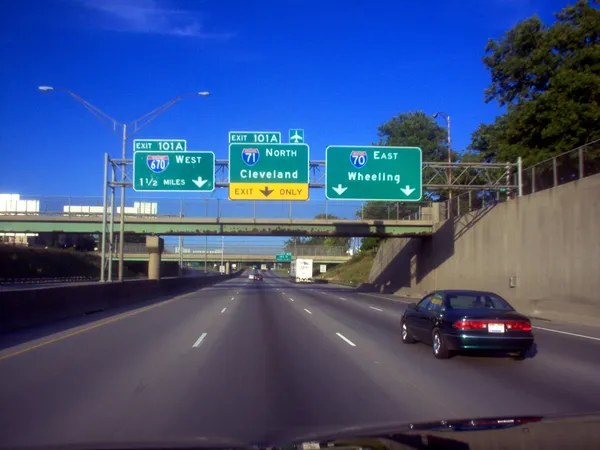
In the first incident, recorded by traffic cameras on April 30, 2025, a red vehicle traveling south on I-71 near the downtown interchange slowed and came to a stop in a middle lane shortly before the I-670 split. Vehicles behind it also stopped, and a following vehicle struck the stopped line, resulting in a multi-vehicle crash. The vehicle that initially stopped continued on and exited after the collision sequence began.
Less than a week later, on May 5, 2025, another incident occurred on I-71 northbound near the Weber Road exit around the morning commute. Video shows a white vehicle entering from the shoulder and moving across lanes at low speed, stopping at points in the left lane. Drivers behind it braked and maneuvered to avoid it, and a collision occurred in the queue that formed. No life-threatening injuries were reported from that crash.
Why highway stops escalate quickly
Interstates are engineered for steady, high-speed flow with limited decision time. A vehicle that stops in a travel lane—especially near ramps where drivers are already changing lanes—can create a sudden speed differential that forces trailing drivers into hard braking or evasive maneuvers. When one driver brakes, the effect can propagate backward, increasing the likelihood of rear-end impacts, side-swipes and secondary crashes.
- Stopping reduces the time and distance other drivers have to react.
- Lane changes under braking can create conflicts across multiple lanes.
- Large vehicles need longer stopping distances, raising the risk of high-impact rear-end collisions.
Rules and accountability considerations
Ohio traffic law generally restricts stopping on roadways in ways that impede traffic flow, and interstate driving rules are built around maintaining safe speed, assured clear distance ahead, and predictable lane movement. In multi-vehicle crashes, fault determinations typically examine whether a driver created a hazard—such as stopping in a travel lane without an emergency—as well as whether following drivers maintained adequate space and control for traffic conditions.
Context: a recurring safety issue on I-71
These incidents occurred on a heavily traveled corridor that has also seen other serious crashes. In February 2026, a separate chain of events on I-71 near downtown Columbus involved a wrong-way vehicle and a subsequent fatal collision sequence, illustrating how quickly unexpected hazards can cascade on limited-access highways.
For drivers who miss an exit on an interstate, safety guidance is consistent: continue to the next exit rather than stopping or attempting a last-second correction across lanes.
What to watch going forward
Investigations into specific crashes can take time, particularly when video evidence and multiple vehicles are involved. For commuters, the immediate takeaway is operational rather than interpretive: avoid abrupt stops in travel lanes, maintain following distance, and treat ramp areas as higher-risk zones where unexpected maneuvers are more likely.
Pucks, Politics, and Progress: Your Columbus Morning Briefing
West Broad Transit Study Kickoff and Downtown Ramp Up Progress Define Thursday Commute