West Columbus residents press for lower speeds and enforcement at Hilliard-Rome Road’s crash-prone intersections
A corridor under renewed scrutiny after a serious crash
Residents on Columbus’ far west side are calling for additional traffic-safety changes along Hilliard-Rome Road, focusing on intersections that have a record of frequent and severe crashes. The latest push follows a hit-and-run incident in November 2025 in which a juvenile was reported to be in critical condition.
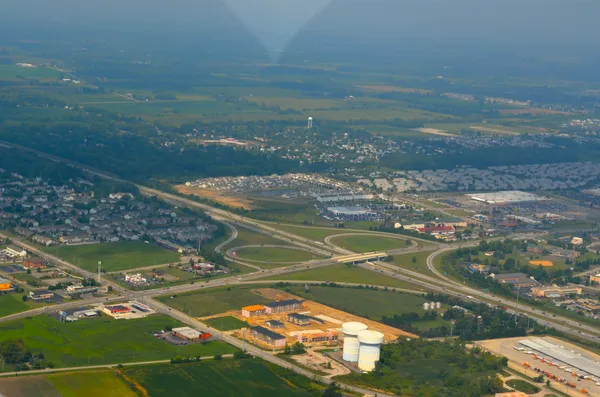
The discussion has centered on the intersections of Hilliard-Rome Road at Renner Road and at Roberts Road, locations previously identified among the most dangerous intersections in central Ohio during the 2014–2019 period. Residents say traffic speeds and driver behavior remain major concerns, particularly during peak travel times.
What changes have already been made
In May 2025, Columbus implemented a new signal operation along the corridor as part of its Vision Zero safety program: a flashing yellow arrow for left turns. Under this setup, drivers can turn left on a protected green arrow, or proceed on a flashing yellow only after yielding to oncoming traffic and pedestrians.
The city characterized the flashing yellow arrow as a first-of-its-kind deployment on Columbus streets. Early results cited by the city indicated a decrease in injury crashes following installation.
What residents are asking for now
Local advocates, including leadership within the Far West Side Area Commission, say the signal changes have not fully addressed risks they observe along the roadway. Their requests have focused on two primary actions: lowering posted speed limits on segments of Hilliard-Rome Road and increasing visible traffic enforcement.
The calls align with broader city actions in recent years that have used speed management as a safety strategy. Columbus reduced speed limits to 25 mph on downtown streets in 2023 and later reported fewer serious and fatal crashes in the months after the change. In late 2024, City Council approved additional speed-limit reductions on several corridors elsewhere in Columbus, with new limits taking effect after signage updates.
How safety decisions are typically made
Speed-limit changes and intersection redesigns generally require an engineering and operational review, followed by legislation where applicable, and then implementation steps such as new signs, signal timing updates, and public communication. Separately, crash reporting and records are maintained through state systems after local reports are submitted and accepted, which can affect how quickly complete data becomes available for analysis.
- Key locations highlighted by residents: Hilliard-Rome at Renner; Hilliard-Rome at Roberts
- Measures already deployed: flashing yellow arrow left-turn operations (installed in 2025)
- Measures residents want expanded: lower speeds, increased enforcement presence
“It’s horrifying… it’s not uncommon to… see… leftover car parts that were part of the crash,” said Sharon Rastetter, chair of the Far West Side Area Commission.
City leaders have not announced a new timeline for additional speed-limit actions on Hilliard-Rome Road. For residents, the central question remains whether incremental signal upgrades will be paired with broader speed and enforcement measures on a corridor they describe as persistently high-risk.